
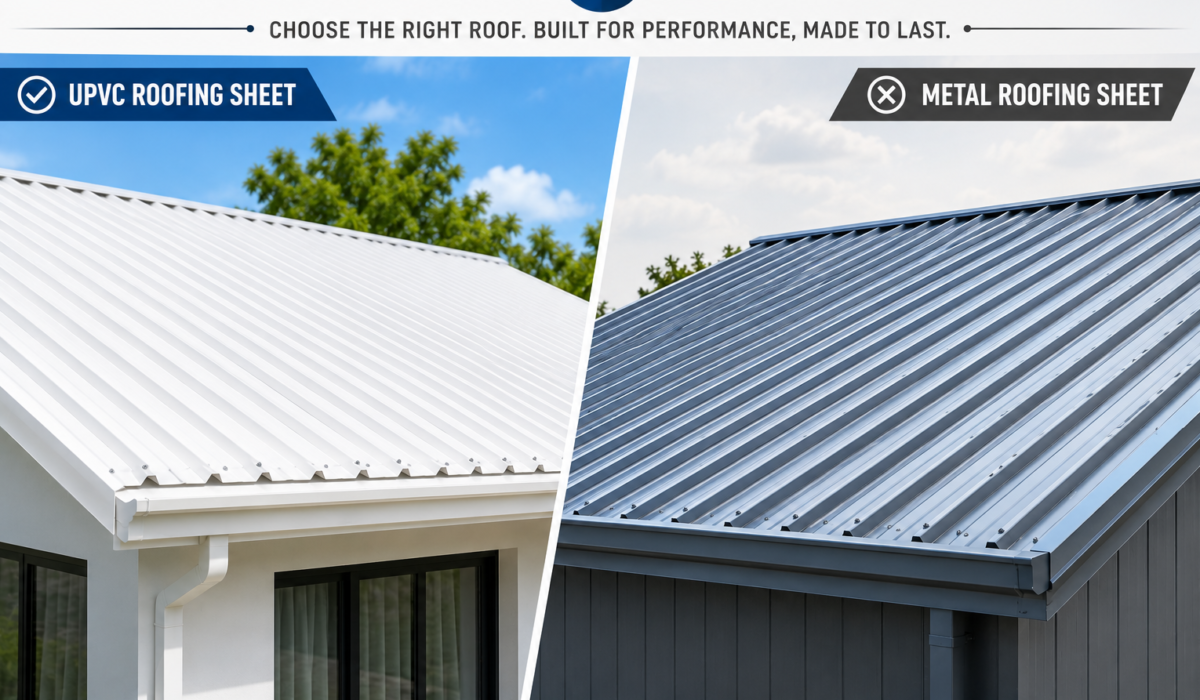
Introduction
What Is a UPVC Roofing Sheet?
What Is a Metal Roofing Sheet?
Metal roofing — usually galvanized iron (GI) or color-coated steel — is the material most people default to simply because it's familiar. It's been the standard for industrial sheds and factory roofing for decades, it's readily available from almost any hardware supplier, and installers already know it inside out. That familiarity is a real advantage. The tradeoffs show up later, not on installation day.
UPVC vs Metal Roofing Sheet
| Factor | UPVC Roofing Sheet | Metal Roofing Sheet |
|---|---|---|
|
Rust/Corrosion |
Never rusts |
Rusts over time, especially in humid or coastal air |
|
Heat Inside the Building |
Noticeably cooler — poor heat conductor |
Gets very hot; conducts heat directly indoors |
|
Noise During Rain |
Quiet, muffled sound |
Loud, especially in heavy monsoon rain |
|
Weight |
Lightweight |
Moderate to heavy depending on gauge |
|
Upfront Cost |
Slightly higher per sheet |
Generally cheaper per sheet |
|
Long-Term Cost |
Lower — minimal repainting or repair |
Higher — repainting, rust treatment, eventual replacement |
|
Typical Lifespan |
15–20+ years |
8–15 years before serious rust sets in |
|
Fire Behavior |
Fire-retardant grades available |
Non-combustible, but conducts heat in a fire |
|
Installation |
Slightly more specialized fitting |
Widely known, easy to source installers |
|
Best For |
Homes, poultry farms, offices, cold storage areas |
Large industrial sheds, budget-first projects |
Cost: The Number That Actually Matters Is Total Cost, Not Sheet Price
Metal roofing almost always wins on the sticker price. If you're comparing per-square-foot cost of the raw sheet, metal is usually 15–25% cheaper than UPVC. That's real, and if your budget is genuinely tight, it matters.
But that's not the full picture. A GI sheet roof in Coimbatore's climate typically needs repainting or rust treatment within 5–7 years, and full replacement somewhere around the 10–12 year mark if it's exposed to consistent rain. Add that up over 15 years and UPVC's higher entry price usually evens out — sometimes it ends up cheaper overall, because you're not paying for a second roof halfway through the first one's expected life.
Heat: This Is Where Most People Change Their Mind
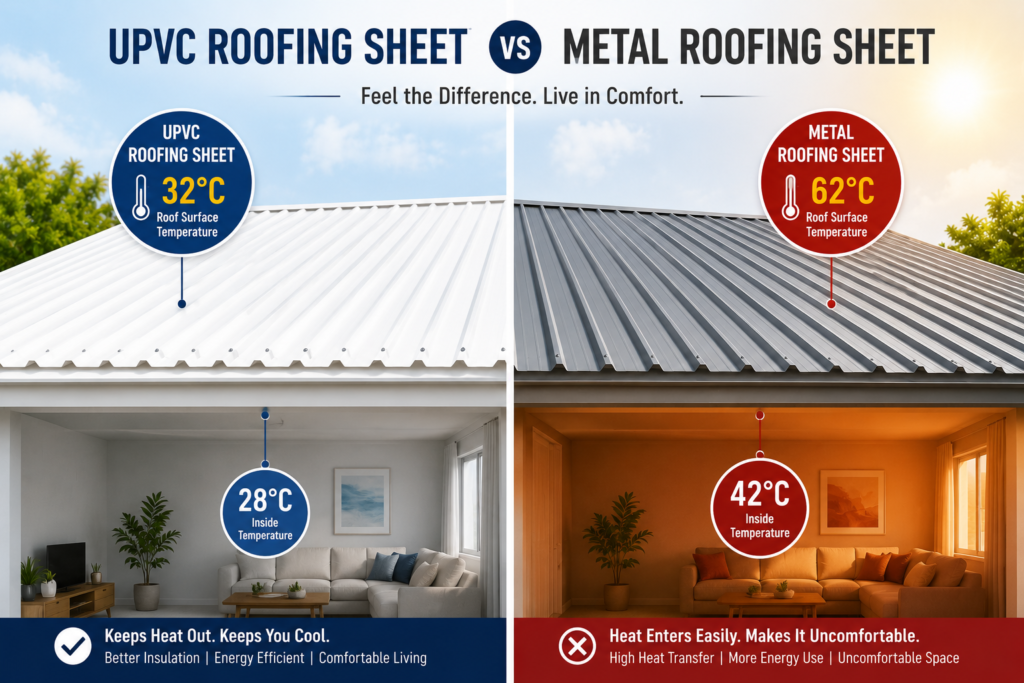
If you've ever stood under a metal roof at 1 PM in April, you already know the answer here. Metal conducts heat efficiently — that's a great property for a frying pan, not for a roof. Interior temperatures under bare metal sheets can run noticeably hotter than the same space under UPVC, which is why so many poultry farm owners specifically switch to UPVC even when metal was cheaper upfront — a stressed, overheated flock costs more than the roof does.
UPVC doesn't have this problem. It's a poor heat conductor by nature, and most sheets are also designed with a reflective surface that bounces sunlight instead of absorbing it.
Noise: Monsoon Season Is the Real Test
Coimbatore doesn't get gentle drizzle most of the year, but when the monsoon arrives, it arrives properly. Bare metal roofing amplifies that sound significantly — inside a metal-roofed shed during heavy rain, normal conversation can be genuinely difficult. UPVC's denser, less resonant structure absorbs a lot of that impact noise instead of transmitting it, which matters a lot more than people expect until they've actually lived or worked under both.
Maintenance: What You're Actually Signing Up For
Metal roofing needs active upkeep — periodic repainting, rust spot treatment, and eventually patching or full sheet replacement once corrosion sets in seriously. None of that is optional if you want the roof to last; it's built into the cost of owning metal roofing.
UPVC is close to maintenance-free by comparison. No rust means no rust treatment. Occasional cleaning is usually the extent of it. If your priority is "install it and stop thinking about it," this is the deciding factor for a lot of our clients.
So Which One Should You Actually Choose?
Here's the honest, non-generic answer:
Choose metal roofing if: your budget is the primary constraint, you need a very large industrial span covered fast, and you're prepared for repainting/maintenance cycles down the line.
Choose UPVC roofing if: the building is occupied or livestock-populated (heat and noise matter), you're roofing something you don't want to think about again for 15+ years, or you're in a humid/coastal-adjacent area where rust sets in faster than usual.
For most homes, poultry farms, small factories, and commercial buildings around Coimbatore, UPVC tends to be the better long-term call — but if you're covering a massive warehouse span on a tight budget with no occupancy concerns, metal still has a legitimate place.
Looking for the Right Roofing Solution?
Get expert guidance on choosing the best roofing sheet for your factory, warehouse, commercial building, or home. Our team offers a FREE site inspection and customized roofing recommendations.
Book a Free Site VisitFrequently Asked Questions
Is UPVC roofing more expensive than metal roofing?
Yes, upfront — usually by 15–25% per sheet. Over a 15-year period, UPVC's lower maintenance and longer lifespan often close or reverse that gap.
Does metal roofing always rust?
Not immediately, but untreated or poorly coated GI sheets typically show rust within 5–7 years in Tamil Nadu's humidity, especially near coastal-influenced weather patterns.
Which is quieter in heavy rain, UPVC or metal?
UPVC, by a noticeable margin. Metal roofing amplifies rain impact sound significantly more than UPVC's denser structure.
Can UPVC roofing sheets handle Coimbatore's summer heat?
Yes — this is one of UPVC's strongest advantages. It's a poor heat conductor, so interiors stay measurably cooler than under bare metal roofing.
Is metal roofing a bad choice overall?
No — for large industrial spans on tight budgets with no heat/noise sensitivity, metal is still a reasonable, well-understood choice. It's not "bad," just a different set of tradeoffs.
Conclusion
Neither material is universally "better" — that framing is mostly a marketing simplification. What actually matters is matching the material to the building, the climate, and how long you want the roof to last before you're back here comparing options again. If you're still unsure which fits your specific project, a short site visit usually settles it faster than any spec sheet can.

Leave feedback about this