
Introduction
Choosing the right roofing material is essential for the durability, safety, and long-term performance of any building. Whether you're constructing a factory, warehouse, commercial space, agricultural shed, or industrial unit, the roofing sheet you choose directly affects maintenance costs, indoor temperature, and overall lifespan.
When exploring roofing options, many people come across PVC roofing sheets and UPVC roofing sheets. Since both materials belong to the same plastic family, they are often mistaken for the same product. However, they have different properties and are designed for different applications.
In this guide, we'll explain the difference between PVC and UPVC roofing sheets, compare their features, advantages, and applications, and help you decide which roofing material is best for your project.
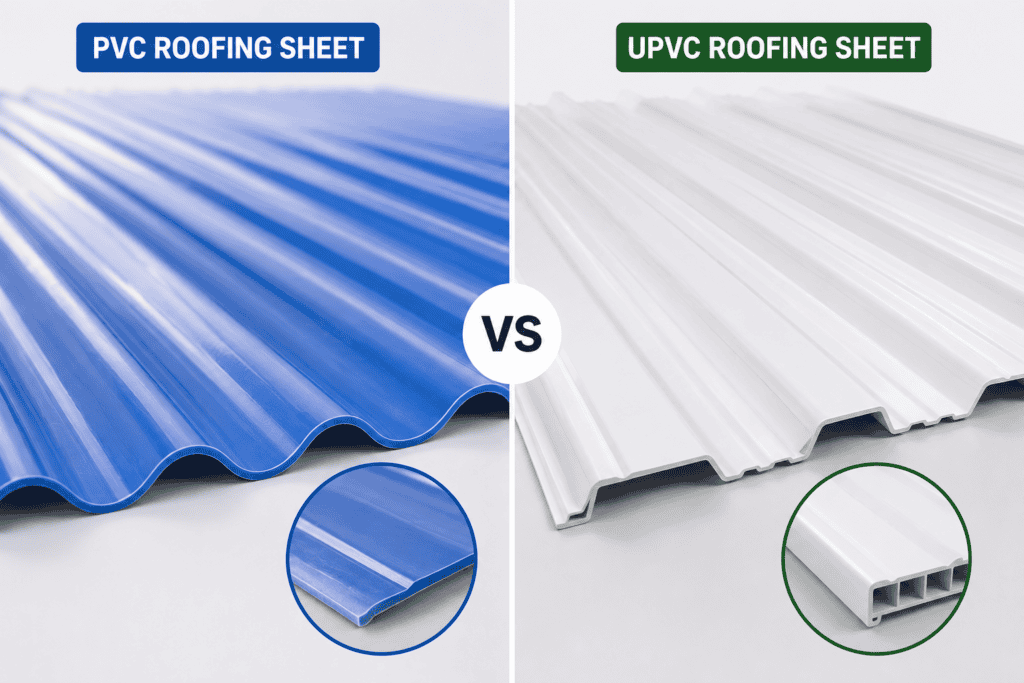
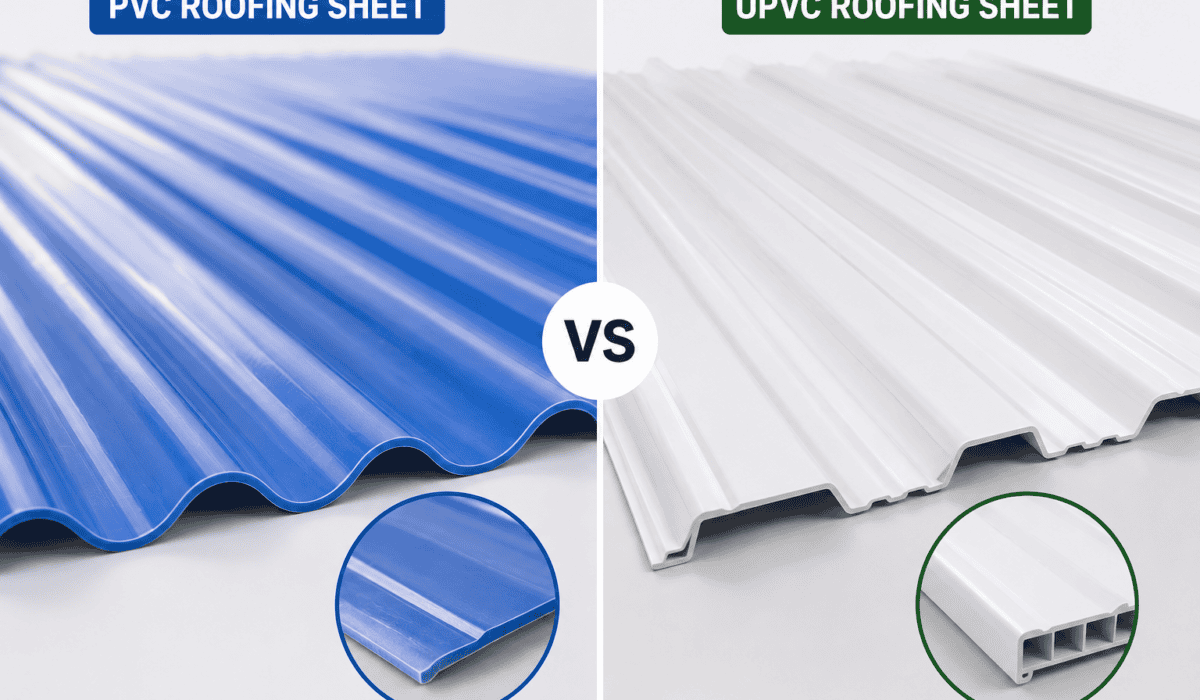
PVC (Polyvinyl Chloride) is a commonly used plastic material that contains plasticizers, making it flexible and lightweight. PVC roofing sheets are often used for temporary structures, small sheds, and residential applications where heavy-duty performance is not required.
PVC sheets are resistant to moisture and corrosion, making them suitable for areas with moderate weather conditions.
However, prolonged exposure to high temperatures and harsh sunlight may reduce their lifespan compared to more advanced roofing materials.
Common Applications
- Garden sheds
- Temporary roofing
- Small warehouses
- Poultry farms
- Residential shade structures
UPVC (Unplasticized Polyvinyl Chloride) is a stronger and more rigid form of PVC. Since it does not contain plasticizers, it offers better structural strength, higher durability, and improved resistance to heat, UV rays, and chemicals.
UPVC roofing sheets are specifically designed for industrial and commercial buildings where long-term performance is essential. They are widely used in factories, warehouses, textile units, chemical plants, and manufacturing facilities because they can withstand challenging environmental conditions while requiring minimal maintenance.
Common Applications
- Industrial factories
- Warehouses
- Commercial buildings
- Textile industries
- Food processing units
- Chemical plants
- Agricultural buildings
PVC Roofing Sheet vs UPVC Roofing Sheet
Although PVC and UPVC are made from similar base materials, their performance differs significantly.
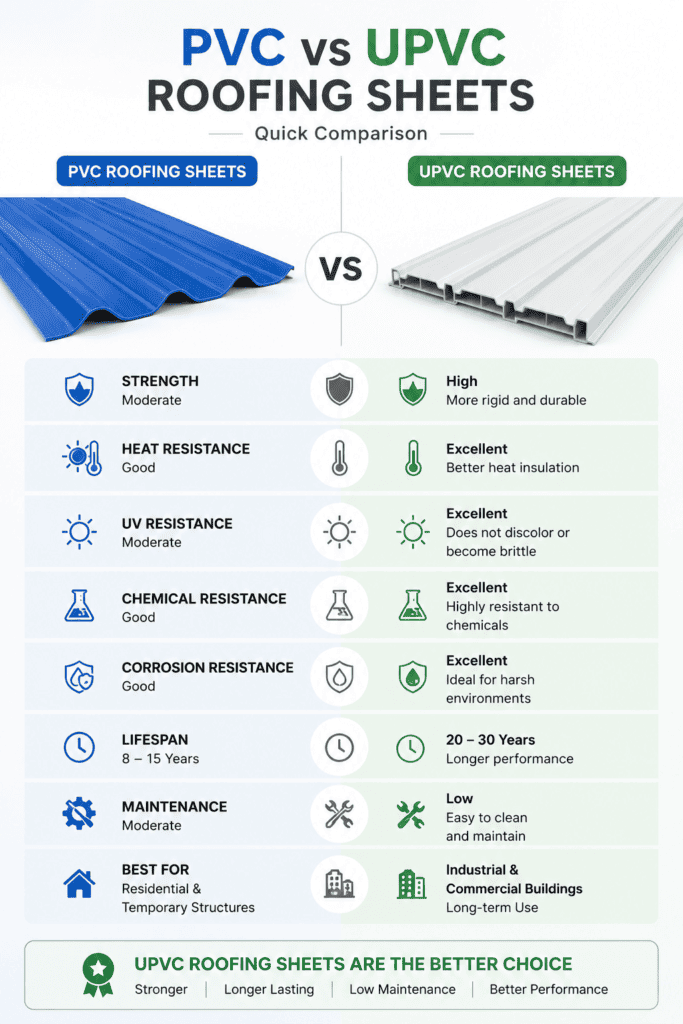
| Feature | PVC Roofing Sheets | UPVC Roofing Sheets |
|---|---|---|
|
Strength |
Moderate |
High |
|
Heat Resistance |
Good |
Excellent |
|
UV Resistance |
Moderate |
Excellent |
|
Chemical Resistance |
Good |
Excellent |
|
Corrosion Resistance |
Good |
Excellent |
|
Lifespan |
8–15 Years |
20–30 Years |
|
Maintenance |
Moderate |
Low |
|
Best For |
Residential & Temporary Structures |
Industrial & Commercial Buildings |
Durability
Durability is one of the biggest differences between PVC and UPVC roofing sheets.
PVC roofing sheets are suitable for light-duty applications but may lose strength over time when exposed to continuous sunlight, high temperatures, or industrial environments.
UPVC roofing sheets are manufactured to withstand harsh weather conditions, heavy rainfall, humidity, and corrosive industrial environments. Their rigid structure provides greater stability, making them a reliable long-term roofing solution.
Heat Resistance
In tropical climates like India, heat resistance is an important factor when selecting roofing materials.
PVC roofing sheets tend to absorb more heat, which can increase indoor temperatures.
UPVC roofing sheets are engineered to reduce heat transfer, helping maintain a cooler indoor environment. This not only improves comfort but can also reduce cooling costs in factories and commercial buildings.
Chemical and Corrosion Resistance
Industrial buildings are often exposed to chemicals, fumes, and moisture. Roofing materials that cannot resist these conditions may deteriorate quickly.
UPVC roofing sheets provide excellent resistance to chemicals, acids, alkalis, and corrosion, making them suitable for industries such as textiles, chemicals, food processing, and manufacturing.
PVC roofing sheets offer basic resistance but are generally better suited for less demanding environments.
Lifespan and Maintenance
The lifespan of a roofing sheet determines its long-term value.
PVC roofing sheets generally last between 8 and 15 years, depending on weather conditions and maintenance.
UPVC roofing sheets typically last 20 to 30 years or more with proper installation and routine maintenance.
Because UPVC is resistant to rust, corrosion, and UV damage, it requires less maintenance, helping reduce operational costs over time.
Cost Comparison
PVC roofing sheets usually have a lower initial purchase cost, making them a practical option for temporary or budget-conscious projects.
UPVC roofing sheets involve a higher upfront investment, but their longer lifespan, reduced maintenance, and improved energy efficiency often result in lower lifetime costs.
When evaluating roofing solutions, it's important to consider the total cost of ownership rather than just the initial price.
Which Roofing Sheet Should You Choose?
The right choice depends on your project requirements.
Choose PVC roofing sheets if you need:
Choose PVC roofing sheets if you need:
- Affordable roofing
- Temporary structures
- Residential sheds
- Small storage buildings
Choose UPVC roofing sheets if you need:
- Industrial roofing
- Commercial roofing
- Factory roofing
- Warehouse roofing
- Long-term durability
- Heat-resistant roofing
- Low-maintenance roofing
For industrial and commercial applications, UPVC roofing sheets are generally the preferred choice because of their superior performance and longevity.
Why Choose Innovative Roof Tech Pvt Ltd?
- Excellent heat insulation
- High durability
- UV resistance
- Chemical resistance
- Corrosion protection
- Low maintenance
- Long service life
Whether you're planning a new industrial project or replacing an existing roof, our team can help you choose the right roofing solution for your requirements.
Frequently Asked Questions
Is UPVC better than PVC roofing sheets?
Yes. UPVC roofing sheets are stronger, more durable, and offer better resistance to heat, UV rays, chemicals, and corrosion than standard PVC roofing sheets.
Which roofing sheet lasts longer?
UPVC roofing sheets generally last 20 to 30 years, while PVC roofing sheets typically last 8 to 15 years, depending on usage and environmental conditions.
Are UPVC roofing sheets suitable for factories?
Yes. UPVC roofing sheets are widely used in factories, warehouses, textile units, and commercial buildings because of their strength and long lifespan.
Are UPVC roofing sheets worth the investment?
Although the initial cost is higher, UPVC roofing sheets offer better long-term value through lower maintenance, greater durability, and an extended service life.
Conclusion
Understanding the difference between PVC and UPVC roofing sheets helps you make an informed decision based on your building's requirements. While PVC roofing sheets are suitable for temporary and light-duty applications, UPVC roofing sheets provide superior strength, heat resistance, corrosion protection, and long-term durability, making them the preferred choice for industrial and commercial roofing projects.
If you're looking for a reliable and long-lasting roofing solution, Innovative Roof Tech Pvt Ltd offers premium-quality UPVC roofing sheets that are engineered to perform in demanding environments. Contact our team today to find the right roofing solution for your factory, warehouse, commercial building, or industrial facility.
Leave feedback about this